
Creation: Introduction
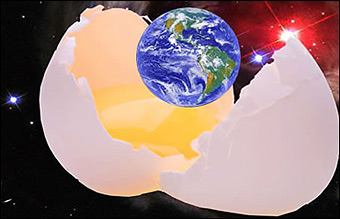
If someone told you that the world was hatched from a cosmic egg, what would you think?
It’s not as daft as it sounds!
The yolk represents the sun and the white of the egg represents the moon.
If you were born in China or India many years ago, this is what the adults would tell you…
and guess what – you would probably have believed it too because all of your friends and family thought the same thing.
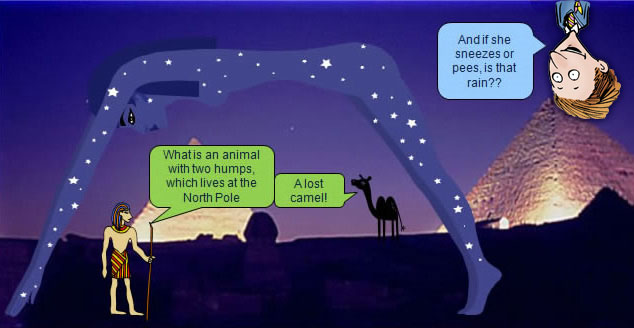
But in Egypt people believed something different. They believed that the stars first appeared when the sky god, Nut, arched over the ground.
So with so many stories around, what should we believe? Generally, we believe what people tell us. But how do our parents and teachers and experts know what to believe?
Is everyone just believing what they are told?
Three approaches
Today, as well as the ideas we have from religious traditions, we also have the ideas that science has given us. The challenge is they don’t seem to match. When the ideas from Religion and Science seem to differ, there are three main approaches that people take when deciding what to believe.
Religion Only
You believe EVERYTHING about creation in religious scripture. When scientists say something different, you say they are mistaken.
Science Only
You believe NOTHING about creation from scripture. You only listen to what scientists tell us.
Open to Both Science and Religion
You take ideas from both religion and science – because taken together you think they give you a bigger picture.
The idea that somehow it might be possible to accept both science and religion might seem odd, given how different they seem to be. To see how this view works, we’re going to call in some professional help. No, not teachers … We’re calling in two Secret Agents. Just remember, you met them here first … and here they are … THE CREATION SLEUTHS!

 Contact us: